Sharing an exciting day at the beach or a new hobby comes naturally to young kids, but organizing those ideas into a formal written structure is an entirely different skill. As children advance past writing simple standalone lines, learning how to string thoughts together logically marks a massive milestone in their literacy journey.
If you are exploring competitive academic environments or looking for a premier private school Tampa, introducing structured, interactive writing practice early on helps build lifelong communicators. Our latest Grade 1 ELA printout uses a fun, ocean-inspired theme to help children arrange transition words and supporting details into a perfectly organized story structure.
How to Solve the Paragraph Sequencing Activity
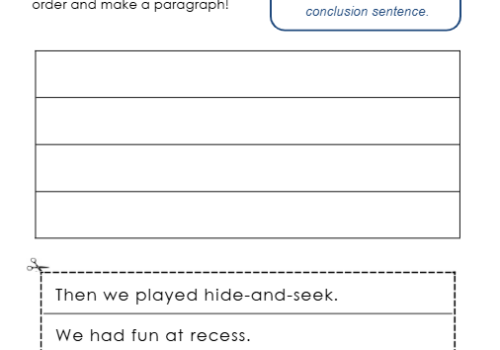
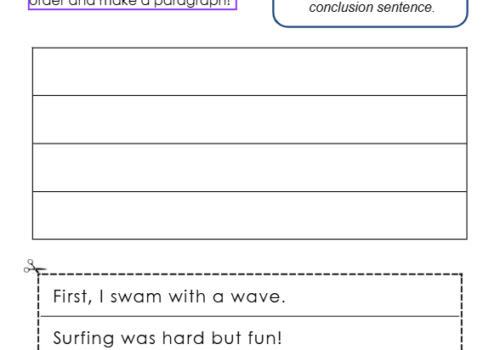
This interactive worksheet turns reading comprehension into a tactile puzzle. By physically cutting, arranging, and pasting the sentences, children visualize how stories flow chronologically. Guide your child through the sheet using these steps:
-
Cut Out the Four Strips: Carefully cut along the dotted lines to separate each individual sentence mix.
-
Break Down the Elements: Review each sentence together to understand its role within a complete paragraph blueprint:
-
Topic Sentence: Introduces the main experience or event (“I learned how to surf today.”).
-
First Detail: Establishes the beginning action of the sequence (“First, I swam with a wave.”).
-
Second Detail: Shows the logical follow-up action or struggle (“Then I tried to stand up.”).
-
Conclusion Sentence: Offers a summary of the day or personal feelings (“Surfing was hard but fun!”).
-
-
Glue the Sequence: Paste the sentences down from top to bottom in correct sequential order to reveal the completed story.
Teacher’s Note: As noted on the sheet, topic sentences and conclusion sentences can sometimes be swapped depending on how the writer wants to frame their story! For instance, beginning with a broad summary statement works just as beautifully as ending with one.
Why Narrative Sequencing is Important for First Graders
Learning how to sequence ideas correctly goes far beyond completing a basic classroom printout—it forms the structural backbone for advanced comprehension.
1. Harnesses the Power of Transition Clues
Recognizing built-in time markers like “First” and “Then” helps young writers see how events connect across a timeline. Spotting these small vocabulary shifts trains the brain to track complicated narratives effortlessly when reading books independently.
2. Connects Hands-On Play to Critical Thinking
First-grade learners often get restless during repetitive grammar drills. Combining scissor practice, spatial sorting, and reading keeps multiple areas of the brain active at once. Kinesthetic activities make structural English rules feel more like a game and less like memorization.
3. Fortifies Primary Elementary Foundations
Mastering basic paragraph building prepares students for more demanding school requirements. Whether a child is expanding their skills in a rigorous kindergarten Tampa curriculum or preparing for multi-paragraph essays in primary school, understanding standard structure early prevents learning gaps.
Supporting Your Student’s Unique Learning Path
Helping your child grow into a confident reader and writer requires the right blend of routine practice at home and a supportive, enriching school community.
For families with younger siblings, starting early in a development-focused preschool near me Tampa helps build fine motor coordination, vocabulary, and basic print awareness before formal schooling begins. If you want an academic environment that combines high literacy expectations with character building and moral development, exploring a trusted Christian academy near Tampa offers an incredibly supportive structure for whole-child growth.
If your first grader frequently runs into writer’s block or struggles to organize their thoughts on the page, specialized attention can make all the difference. Arranging for targeted private tutoring provides a patient, distraction-free environment where an expert educator can break down structural concepts, practice phonics, and turn academic anxiety into absolute confidence.
Print out this paragraph building sheet to add a creative, hands-on storytelling day to your child’s weekly study routine!