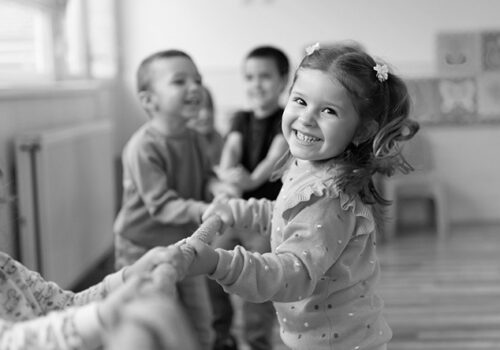


The educational landscape of Florida, particularly within the affluent corridors of South Tampa, has witnessed a profound shift toward specialized, small-scale learning environments. As the traditional school model faces increasing scrutiny regarding its ability to address the diverse needs of modern learners, institutions like Elite Scholar Academy have emerged as “Private Education Specialists.” This report provides an exhaustive analysis of the pedagogical underpinnings, socioeconomic context, and longitudinal efficacy of the micro-school model in the Tampa Bay area. By examining the integration of high-dosage private tutoring, specialized kindergarten tampa readiness, and structured homework help tampa, the analysis elucidates how personalized instruction serves as a catalyst for academic excellence and character development in the 21st century.
The Socioeconomic and Demographic Foundations of South Tampa Education
To understand the demand for an elite private school tampa, one must first analyze the demographic and economic pressures that shape parental expectations in the region. South Tampa, encompassing neighborhoods such as Palma Ceia, Golfview, Parkland Estates and the Henderson Boulevard corridor, is characterized by a highly educated and high-income population. Data from the U.S. Census Bureau indicates that the median household income in the Southwest Tampa PUMA (Public Use Microdata Area) reached $102,885 in 2023, reflecting a 7.15% annual growth. Furthermore, 74% of adults in the region hold a bachelor’s degree or higher, creating a community where educational attainment is the primary metric of success.
This economic stability allows for a robust market for any Tampa private school that can offer a clear alternative to the perceived limitations of large-scale institutions. Parents in South Tampa are increasingly moving away from the “one-size-fits-all” approach, seeking instead “personalized educational journeys” that ignite curiosity and foster growth. The population density of South Tampa, at 7,175.8 people per square mile, creates a competitive but supportive network of families who prioritize extracurricular excellence alongside academic rigor.
Table 1: Economic and Educational Indicators for South Tampa (2023-2025)
| Metric | Region: South Tampa (Henderson Blvd Corridor) | Region: Southwest Tampa PUMA |
| Median Household Income | $79,683 (Individual) | $102,885 (Household) |
| Population | 23,511 | 123,729 |
| Bachelor’s Degree % | 47% | 47.1% |
| Graduate Degree % | 27% | 26.5% |
| Median Age | 27.8 | 37.0 |
| Homeownership Rate Trend | Increasing (10.6% Value Growth) | Stable High Density |
The demographic profile also reveals a community that values traditional, conservative environments for academic excellence. This aligns with the mission of Elite Scholar Academy to redefine education through “very small classes” and “decades of teaching expertise.” In a region where private education is viewed as a strategic investment, the ability of a [Tampa school] to demonstrate measurable outcomes—such as closing the achievement gap or preparing students for elite high school transitions—is paramount.
The Pedagogy of Personalization: The Science Behind the 1:6 Student Ratio
At the core of the micro-school model is the radical reduction of class sizes. Elite Scholar Academy maintains class sizes of 1 to 6 students, with a total enrollment capped at under 20 students. This structural choice is supported by a vast body of educational research highlighting the correlation between small class sizes and student achievement.
Achievement Gains and Standardized Success
Research published in the Review of Educational Research and studies from Stanford University confirm that students in smaller classes consistently outperform their peers in larger settings. A meta-analysis of 96 studies found that reducing class size produced an average improvement of 0.20 standard deviations, which effectively moves a student from the 50th percentile to the 58th. In the context of a Tampa private school, these gains are often even more pronounced due to the ultra-low ratio.
Smaller classes allow for “differentiated instruction” rather than just “differentiated tasks.” Teachers can implement feedback cycles that include individual conferences and detailed written responses, which have one of the highest impacts on student achievement according to the Education Endowment Foundation. For students at Elite Scholar Academy, this means that learning gaps are identified and addressed in real-time, preventing the “compounding failure” often seen in classrooms of 25 or more.
Table 2: Impact of Class Size on Student Engagement and Accountability
| Factor | Large Class (25+ Students) | Micro-Class (1-6 Students) | Pedagogical Implication |
| Visibility | Students can become “invisible.” | Each student is consistently “seen.” | Increased accountability and natural participation.4 |
| Instruction Time | ~67% of time spent on instruction. | ~80%+ of time spent on instruction. | Higher curriculum coverage and enrichment.5 |
| Feedback Frequency | Delayed; generalized. | Immediate; specific. | Faster mastery of complex concepts.6 |
| Social-Emotional | Potential for isolation or cliques. | Supportive, tight-knit community. | Enhanced confidence and interpersonal skills.4 |
4
The psychological benefits of these small environments are equally significant. Research published by the American Psychological Association shows that students in smaller classes demonstrate higher levels of engagement and a stronger sense of classroom community. This is particularly critical for the [tampa school] environment, where parental expectations include not only academic grades but also the development of “character, values, and leadership”.
Early Foundational Mastery: Navigating Kindergartn Tampa Transitions
The transition into formal education is a high-stakes period for both students and parents. The Kindergarten Tampa market is saturated with options, yet many fail to provide the “bridge” necessary for long-term success. Elite Scholar Academy’s Kindergarten Readiness program addresses this through a specialized curriculum that builds a foundation in literacy, numeracy, and social development.
Cognitive and Motor Development in Early Learners
The readiness program at the Academy is built on over 35 years of expertise and limits class sizes to a maximum of 6 students. This allows for a focus on “fine motor skills” and “individualized instruction” that prepares children for the physical and cognitive demands of a classroom. Research indicates that early literacy and numeracy development is highly predictive of future academic success. By using a simulated school environment, the Academy familiarizes children with structured routines, reducing the anxiety often associated with starting in a large [tampa private school].
Individualized assessments are a cornerstone of this process. By identifying specific strengths and areas for growth before the school year begins, educators can customize instruction to ensure a “smooth transition”. This proactive approach prevents the development of early learning gaps that can persist throughout a child’s educational career.
Table 3: Kindergarten Readiness Core Curriculum Components
| Focus Area | Objective | Methodology |
| Early Literacy | Foundational reading/phonics. | Systematic decoding and letter recognition.7 |
| Early Numeracy | Basic math logic and counting. | Hands-on manipulative and logical sequencing.7 |
| Fine Motor Skills | Preparation for writing/tasks. | Guided exercises and physical coordination.7 |
| Social Development | Confidence and interaction. | Simulated classroom routines and peer play.4 |
| Assessment | Gap identification. | 1-on-1 performance benchmarking.7 |
4
Remediation and Acceleration: The Role of Private Tutoring in Tampa
Beyond full-time enrollment, the need for private tutoring in South Tampa has surged as a result of pandemic-related learning loss, common core curriculum and excessive testing. The Intensive Tutoring program at Elite Scholar Academy is positioned as a “high-dosage” intervention—a model that research identifies as the most effective way to close achievement gaps.
The Efficacy of tutoring tampa Models
High-impact tutoring is defined by its frequency and its integration with the student’s classroom curriculum. At the academy, tutoring tampa sessions are personalized, one-on-one experiences designed to help students “master difficult subjects” and “excel in standardized tests”.10 Research indicates that students tutored for half a year can grow a full year or more in reading skills compared to peers not receiving such support.
For many students in the tampa private school circuit, tutoring is not merely for remediation but for acceleration. Elite Scholar Academy’s approach focuses on building “critical thinking skills” and “confidence,” ensuring that students are not just memorizing facts but are developing a “lifelong love for learning.” This personalized support provides a place where students feel comfortable taking risks and expressing their intellectual curiosity.
Table 4: Comparative Outcomes of Tutoring Intensity
| Intervention Type | Frequency | Student Gains (Months of Learning) | Cost-Benefit in South Tampa |
| Standard Tutoring | 1 session/week | 1-2 months | Low; often inconsistent results. |
| Intensive (ESA Model) | Flexible; High-Frequency | 3-15 months | High; effective for gap closure.12 |
| In-School Small Group | Daily (Ratio 1:4) | 6-9 months | Moderate; dependent on tutor quality. |
| Summer Blitz (ESA) | Seasonal Intensive | Prevents 3-month slide | Critical for retention.3 |
9
Cognitive Load and Executive Function: The Need for Homework Help Tampa
One of the most significant stressors for the modern South Tampa family is the “homework struggle.” Educational experts have long argued that homework, when poorly designed, can lead to burnout and family conflict. The Homework Studio at Elite Scholar Academy redefines this practice by providing a “guided space for completing assignments with ease.”
The Science of Practice and Retention
Research indicates that for homework to be effective, it must be a “practice of previously mastered skills” rather than the introduction of new material.15 Students should be able to perform a skill with 90% accuracy before it is assigned for independent practice. The homework help tampa model at the Academy ensures that students have the support needed to achieve this proficiency.
Furthermore, “distributed practice”—shorter sessions spread over time—is superior to single, large practice sessions for long-term retention. The Homework Studio facilitates this by helping students break larger assignments into “manageable steps” and prioritizing tasks based on complexity and deadlines.16 This development of “executive skills” is a primary objective of the program, moving beyond simple completion toward the cultivation of “effective study habits”.
Table 5: Executive Function and Homework Strategy Checklist
| Skill | Pedagogical Implementation | Benefit to Student |
| Task Initiation | Guided start-times and goal setting. | Overcoming procrastination.16 |
| Prioritization | Ranking tasks by difficulty/deadline. | Managing cognitive load and stress.16 |
| Mnemonics | Pattern-based memory shortcuts. | Enhanced coding into long-term memory.17 |
| Visualization | Mental imagery for reading/science. | Improved comprehension and retrieval.17 |
| Self-Regulation | Structured breaks and active focus. | Maintaining concentration and motivation.16 |
15
Literacy as a Long-term Asset: The book reading program tampa
The phenomenon of “summer learning loss,” or the “summer slide,” is a significant concern for any [tampa school] educator. Studies show that students can lose up to 30% of their knowledge during the summer months, with reading and math regression being the most common. Elite Scholar Academy’s Summer Book Blitz book reading program tampa is a strategic response to this challenge.
The Cumulative Impact of Summer Regression
The summer slide is more than a temporary academic hiccup; it represents a cumulative barrier to equity and success. By the time they reach 5th grade, students who experience significant summer learning loss can be 2.5 to 3 years behind their peers. Furthermore, more than two-thirds of the reading achievement gap in 9th grade can be traced back to summer regression during the elementary years.
The book reading program tampa at Elite Scholar Academy focuses on “engaging in activities that foster a love for books”. This is critical because research shows that students who read for pleasure over the break perform significantly better in assessments upon returning to school. By offering “exciting literary adventures,” the academy transforms reading from a school requirement into a “thrilling journey”.
Table 6: Summer Slide Statistics and Mitigation Strategies
| Area of Concern | Loss Metric (Average) | Long-term Impact (by Grade 5) | Mitigation: book reading program tampa |
| Reading | 2 months of proficiency. | 2.5-3 year achievement gap. | Daily literacy engagement and phonics.3 |
| Mathematics | 25-34% of school-year gains. | Compounded logic deficit. | Targeted review sessions/Blitz.13 |
| Spelling/Writing | Significant regression. | Slower writing speed in fall. | Creative writing/Journaling tasks.3 |
| Teacher Confidence | Only 31% feel students retain info. | Need for 6-8 weeks of re-teaching. | “Ready-to-learn” fall status.20 |
Character, Conservative Values, and Executive Excellence
Elite Scholar Academy positions itself not just as a center for academic learning, but as a “secure, conservative environment for academic excellence, character and growth”. This focus on the “whole child” is increasingly requested by parents in the South Tampa private school tampa sector. The academy’s mission is to redefine education with “personalized, enriching learning” that cultivates “passion, critical thinking and values”.
The Executive Skills Curriculum
The academy’s emphasis on “Executive Skills” is a forward-looking response to the changing demands of higher education and the workforce. Research in graduate management education indicates that while functional knowledge is necessary, the ability to “use knowledge and make things happen” is what differentiates leaders. This includes cognitive abilities like “systems thinking,” self-management skills like “adaptability,” and relationship management.
At Elite Scholar Academy, these skills are taught through:
- Mentor-Student Relationships: Building a foundation of trust that allows for “metacognitive relationships”.
- Small Group Collaboration: Allowing students to practice communication and conflict resolution in a safe setting.
- Individualized Learning Plans: Giving students ownership of their progress and helping them set realistic, specific action plans.
As education evolves to include artificial intelligence, the academy’s model of “teacher coaching” becomes even more vital. Research shows that students benefit from being taught how to “argue” with AI tools—critically evaluating the output rather than just accepting it. This high-level critical thinking is only possible in a setting where teachers have the time to engage deeply with each individual student.
Competitive Benchmarking: private school tampa Selection Criteria
Choosing the right tampa private school is a consequential decision for families, with considerations ranging from tuition to cultural ethos. In South Tampa, the landscape is defined by traditional day schools, religious institutions, and boutique academies like Elite Scholar Academy.
Comparative Analysis of Hillsborough County Institutions
Hillsborough County hosts a variety of private schools, but few match the “very small classes” (1-6 students) found at Elite Scholar Academy. Larger institutions like Berkeley Preparatory School or Academy of the Holy Names offer vast resources and extensive athletic programs, but they cannot provide the same level of individualized instruction found in a micro-school setting.
For parents who value “safe and tranquil environments” and “personalized learning methods,” the choice often favors the specialist model. Parent testimonials for Elite Scholar Academy highlight the “safest environment” where students are “taught to work hard and critically think” without being “indoctrinated”. This focus on traditional academic values combined with modern pedagogical research makes the academy a standout in the 2026 educational market.
Table 7: Competitive Landscape of South Tampa Private Schools (2025-2026)
| School Name | Religious/Sectarian | Student/Teacher Ratio | Key Programs | Grade Levels |
| Elite Scholar Academy | Nonsectarian | 1:6 | HIT, Reading Blitz, Readiness | K-8 3 |
| Berkeley Prep | Episcopal | 8:1 | Sports, World Lang, Arts | PK-12 24 |
| Academy of Holy Names | Catholic | 1:11 to 1:16 | Girls HS, Co-ed PK-8 | PK-12 24 |
| Tampa Prep | Nonsectarian | 11:1 | STEM, 6-12 Focus, College Prep | 6-12 27 |
| St. John’s Episcopal | Episcopal | 8:1 | Parish Day School, Traditional | PK-8 27 |
3
Conclusion: The Future of the [tampa school] Specialist Model
The analysis of Elite Scholar Academy and the broader South Tampa private education market reveals a clear preference for hyper-personalized, research-driven instruction. By integrating high-impact private tutoring with foundational kindergarten tampa readiness and strategic homework help tampa, the academy effectively addresses the three most critical challenges in contemporary education: the achievement gap, executive function development, and summer learning regression.
The micro-school model is no longer a niche alternative; it is an essential component of a diverse educational ecosystem. As families navigate the complexities of the 2026 academic year, the premium placed on teacher expertise, small class sizes, and individual character growth will continue to drive enrollment toward “Private Education Specialists.” For the students of Elite Scholar Academy, this means an education that is not just a preparation for a career, but a “foundation for success” and a lifelong “journey of exploration, discovery and excellence”. Through rigorous academic standards and a nurturing, small-scale environment, the academy remains at the forefront of redefining what it means to truly educate a child in the 21st century.